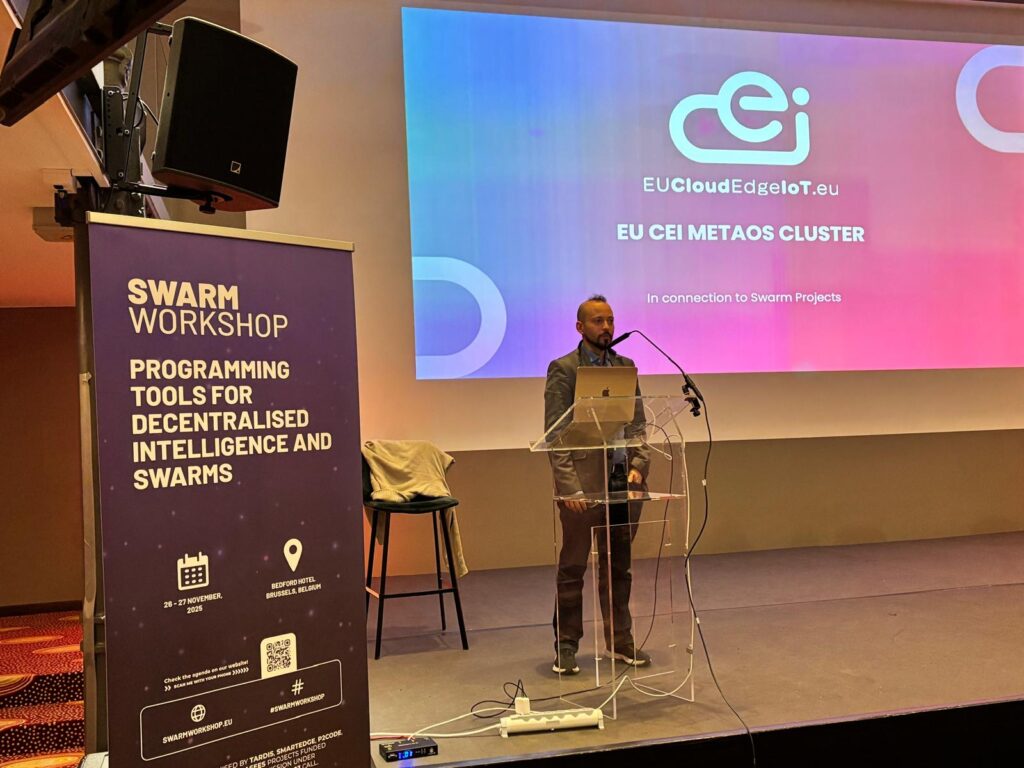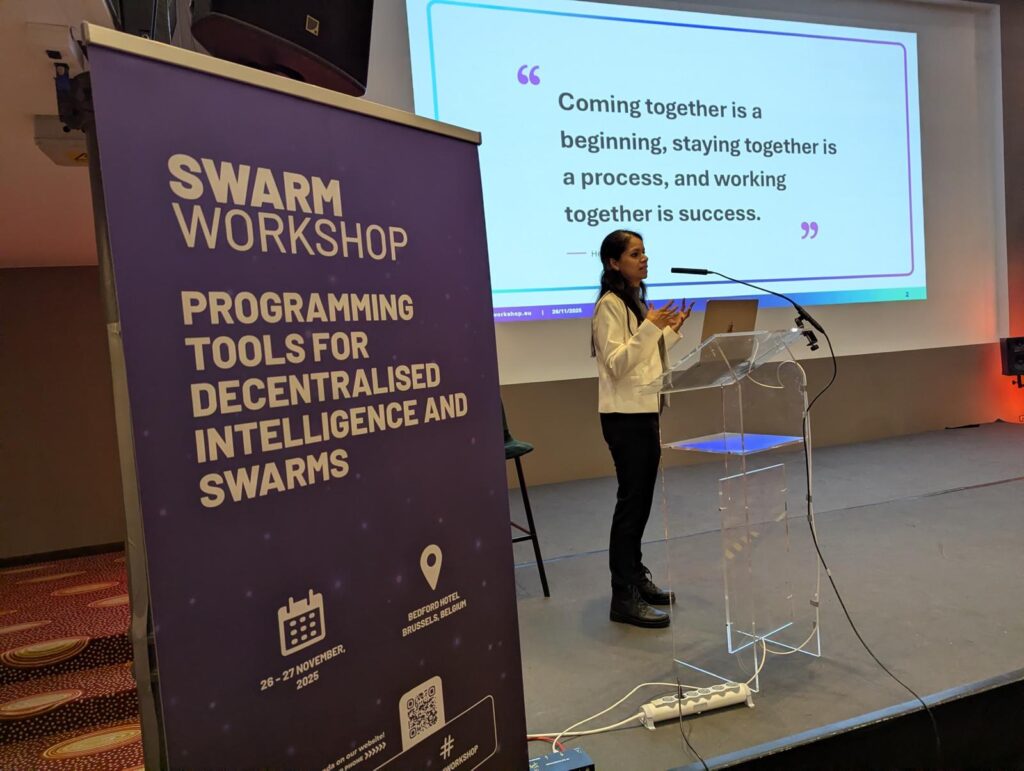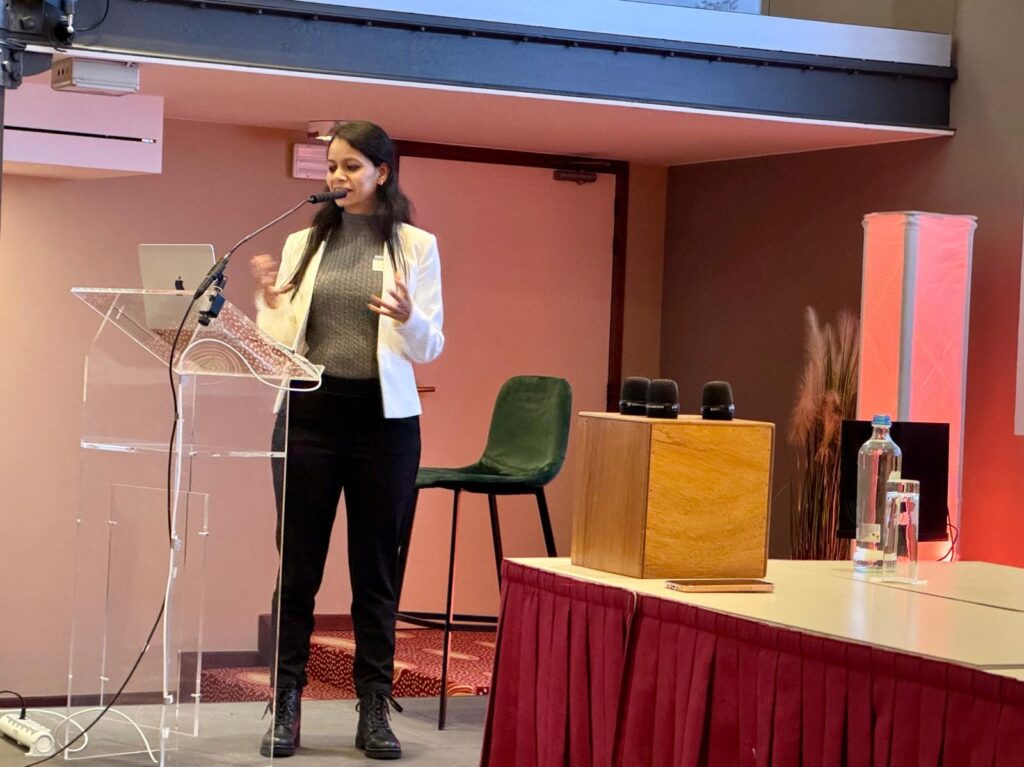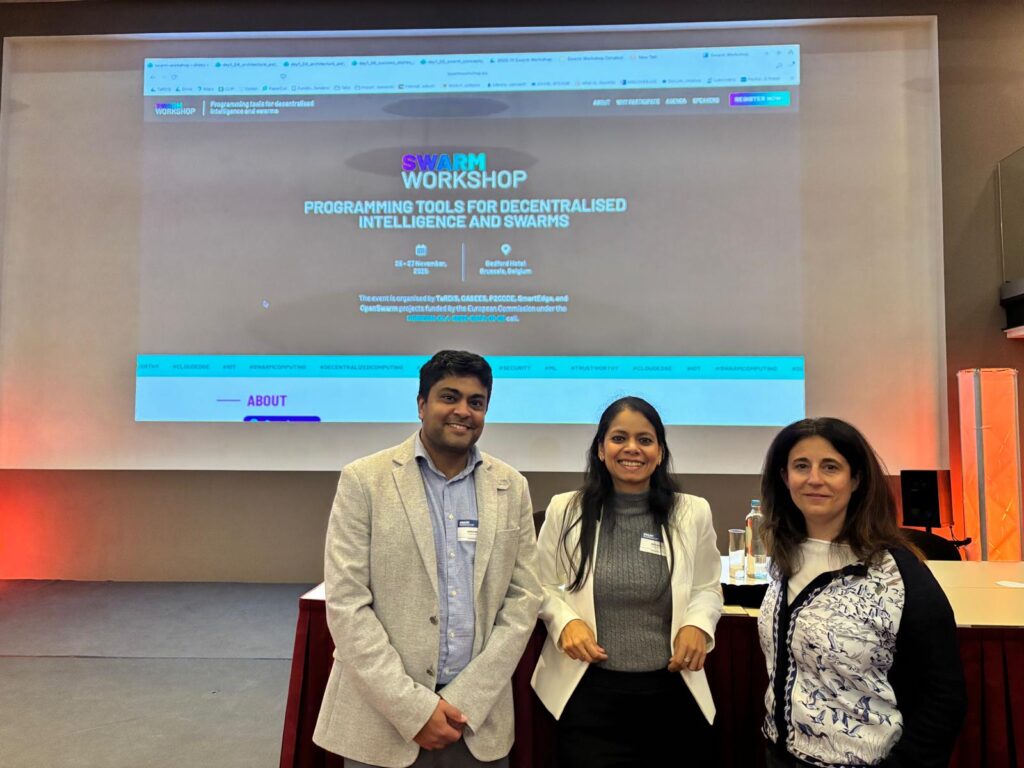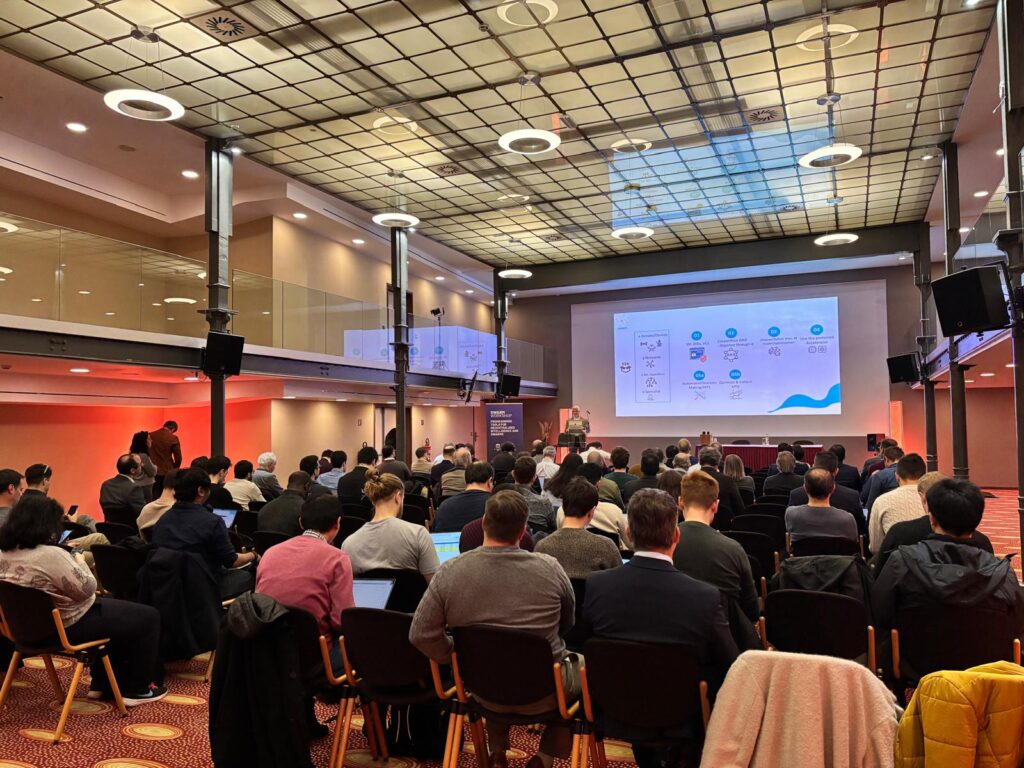
Over two days (26–27 November 2025), leading researchers, engineers, industry stakeholders, and policy makers gathered at the Bedford Hotel in Brussels for the Swarm Workshop 2025, a premier European forum on swarm computing, decentralised intelligence, and next-generation IoT systems. The workshop was co-organised by five European Commission-funded projects — TaRDIS, OASEES, P2CODE, SmartEdge, and OpenSwarm — under the Horizon Europe HORIZON-CL4-2022-DATA-01-03 research cluster (topic swarm computing).
The event offered a comprehensive programme of talks, demos, hands-on sessions, and networking opportunities focused on programming tools for decentralised edge-to-cloud computing, trustworthy AI/ML, cyber-physical systems, and swarm-driven applications across key sectors like energy, mobility, manufacturing, and health.
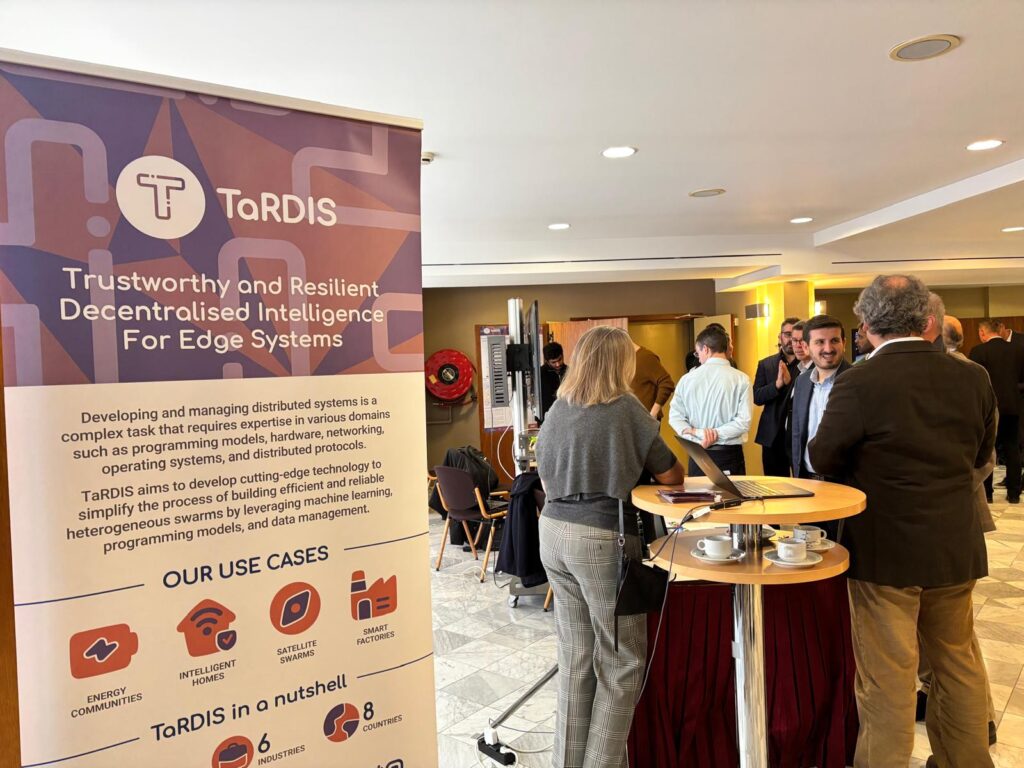
TaRDIS’ participation
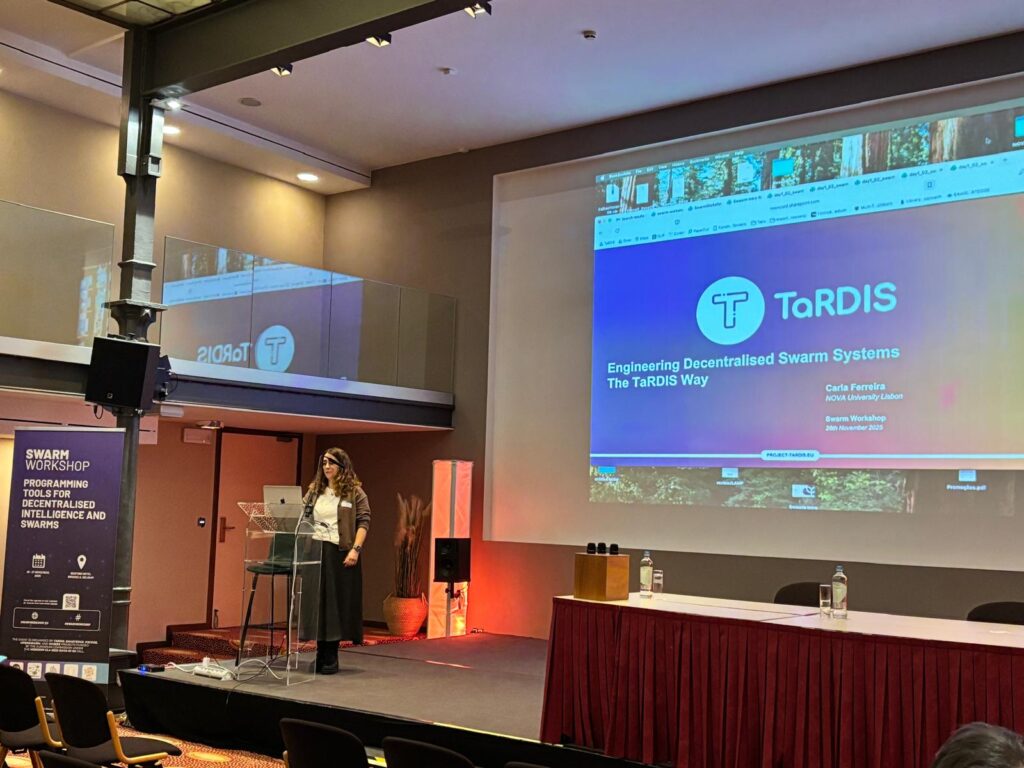
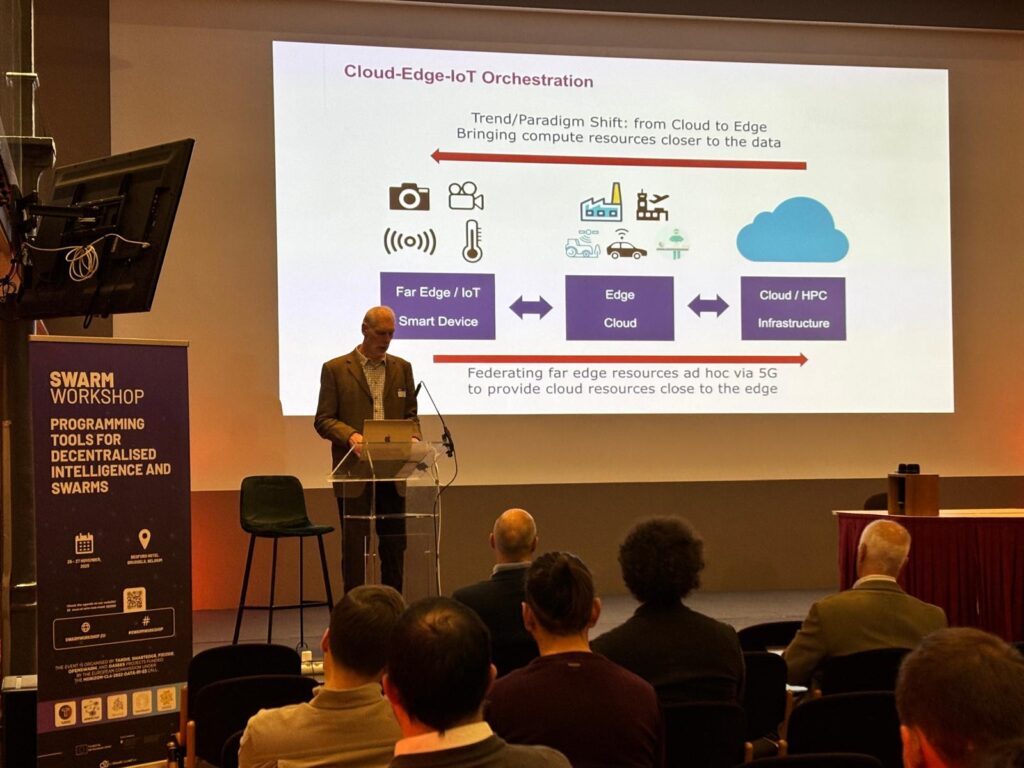
TaRDIS contributed to all sessions of the workshop, as all the other projects, and lead a few of them, eg. presenting engineering decentralized swarm systems, where the coordinator of the project, Prof. Carla Ferierra, NOVA University Lisbon, demonstrates the project’s impact through four industrial use cases spanning satellite swarms, decentralised energy marketplaces, privacy-preserving machine learning, and intelligent factory control.
Then TaRDIS contributed to the “Architecture” session, contributing to topics “Programming Swarms for Smart Factories: From Edge Intelligence to Interoperable Toolchains; mobility; energy and environmental and infrastructure monitoring”.
TaRDIS lead the presentation of the Impact success stories for the entire cluster where we demonstrated the cumulative impact of all the 5 project across all aspects of communication, dissemination and community engagement.
In another technical session of distribution of processing, latency and energy efficiency, TaRDIS contributed with the presentation on “Babel: A framework for developing performant and dependable distributed protocols” and finally in the session of AI and ML, TaRDIS presented the Privacy-Preserving Federated Learning | (FLEdge) Federated Learning at the Edge.
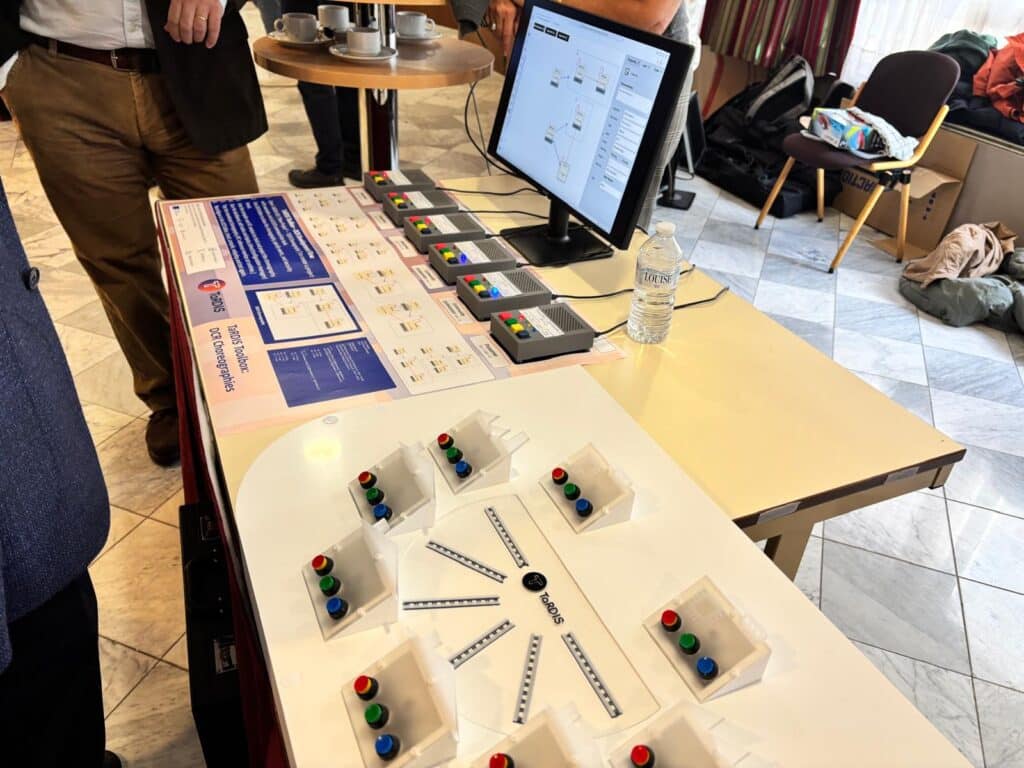
The second day emphasised on the future outlook as well as hand-on live demonstrations of all the usecases.
Highlights from the Workshop
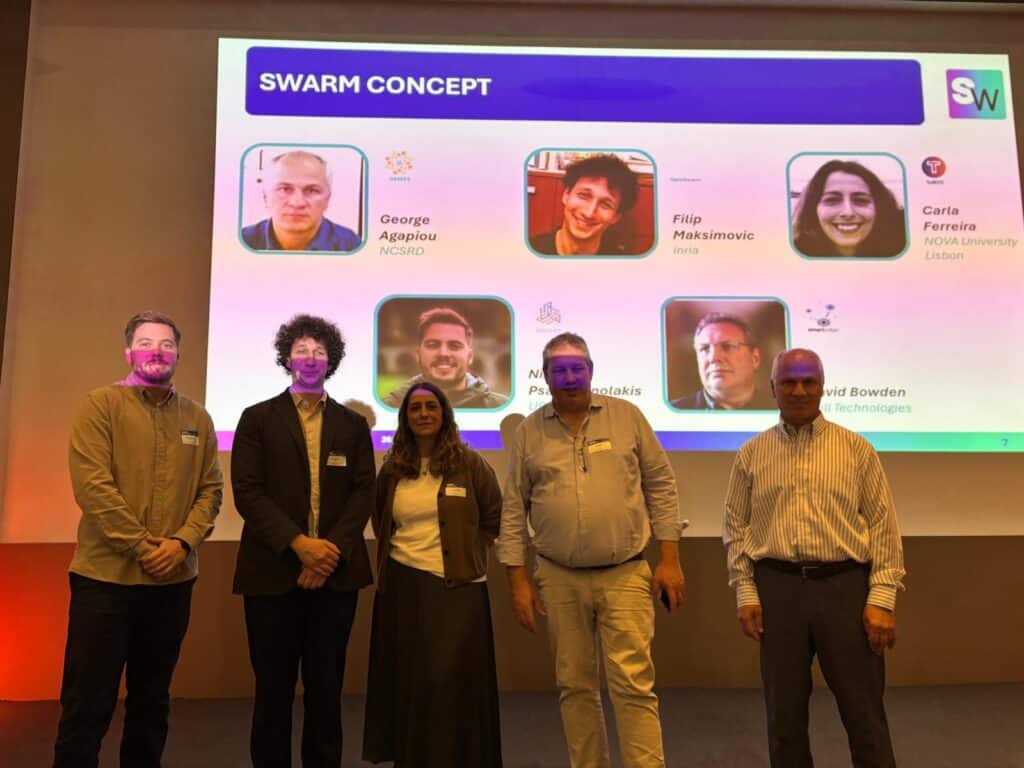
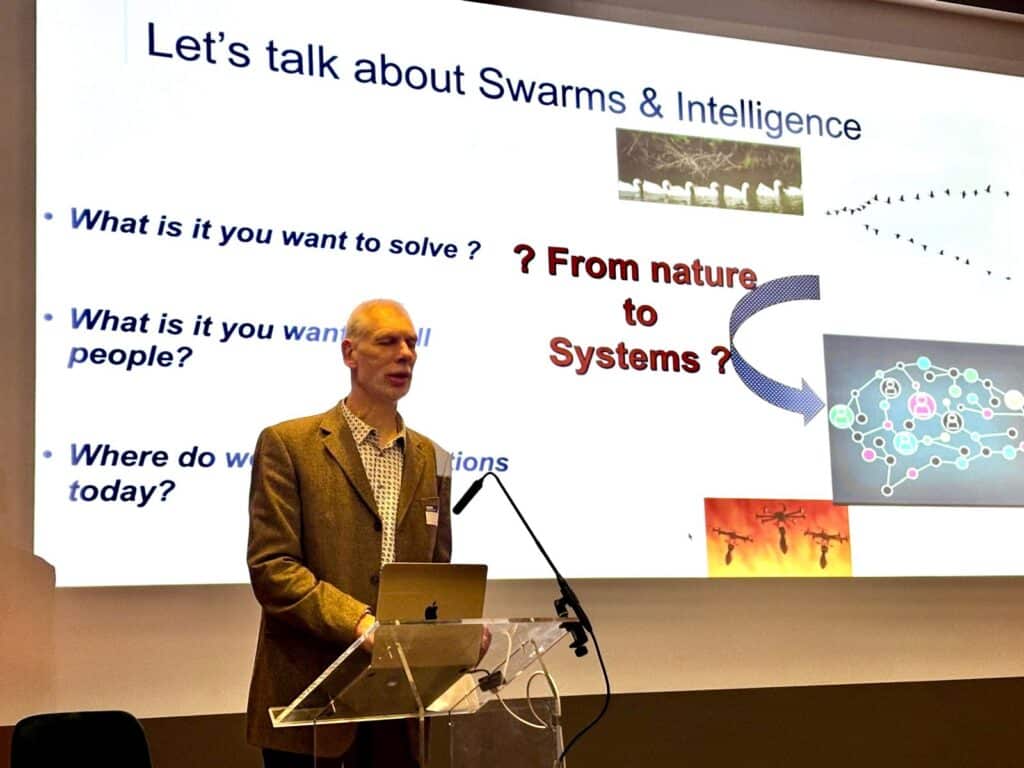
- Opening Keynotes & Definitions: Participants heard from the European Commission’s Head of Sector for IoT, Rolf Riemenschneider, and project leads who outlined conceptual approaches to swarms, including autonomous collaboration, distributed decision-making, and edge-orchestrated intelligence.
- Sector-Focused Sessions: Presentations spanned real-world applications of swarm computing in smart factories, mobility systems, and healthcare devices, illustrating how decentralised architectures can improve adaptability, resilience, and efficiency.
- Industrial & Research Success Stories: Workshops celebrated scientific breakthroughs, impactful open-source contributions, and promising exploitation pathways that bridge research outcomes with market and societal needs.
- AI & Distributed Intelligence: Dedicated sessions explored federated learning at the edge, AI-empowered swarm nodes, and the role of generative AI in shaping future swarms all showcasing how intelligent systems can operate with minimal central coordination.
Interactive Demos Drive Innovation
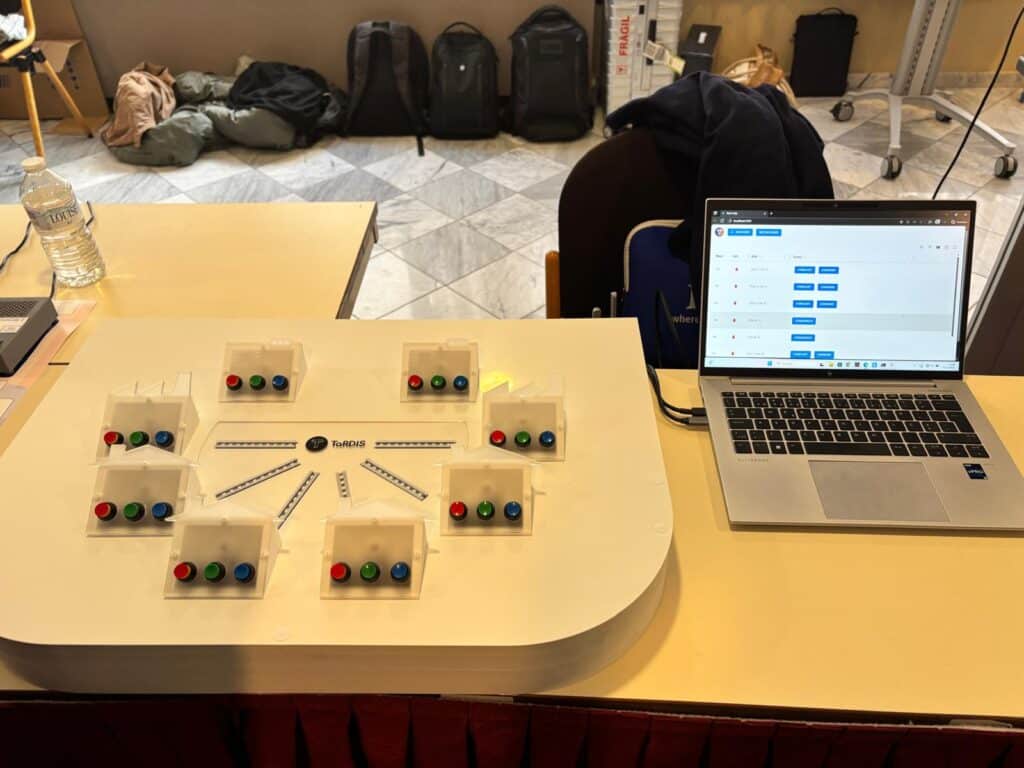
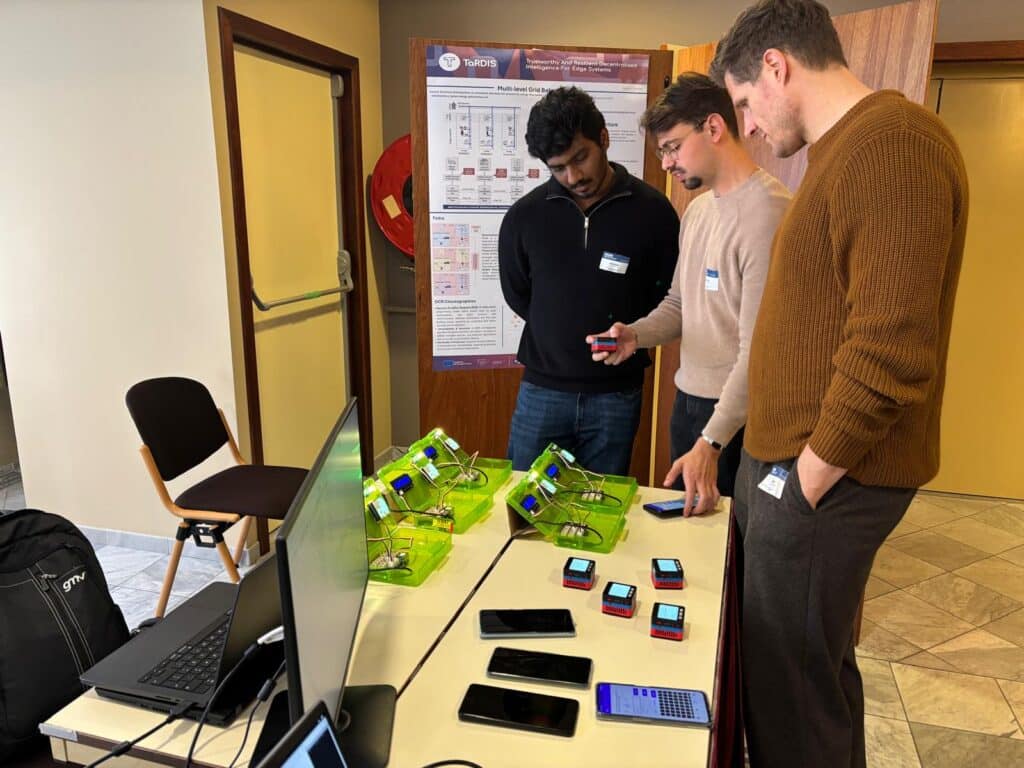
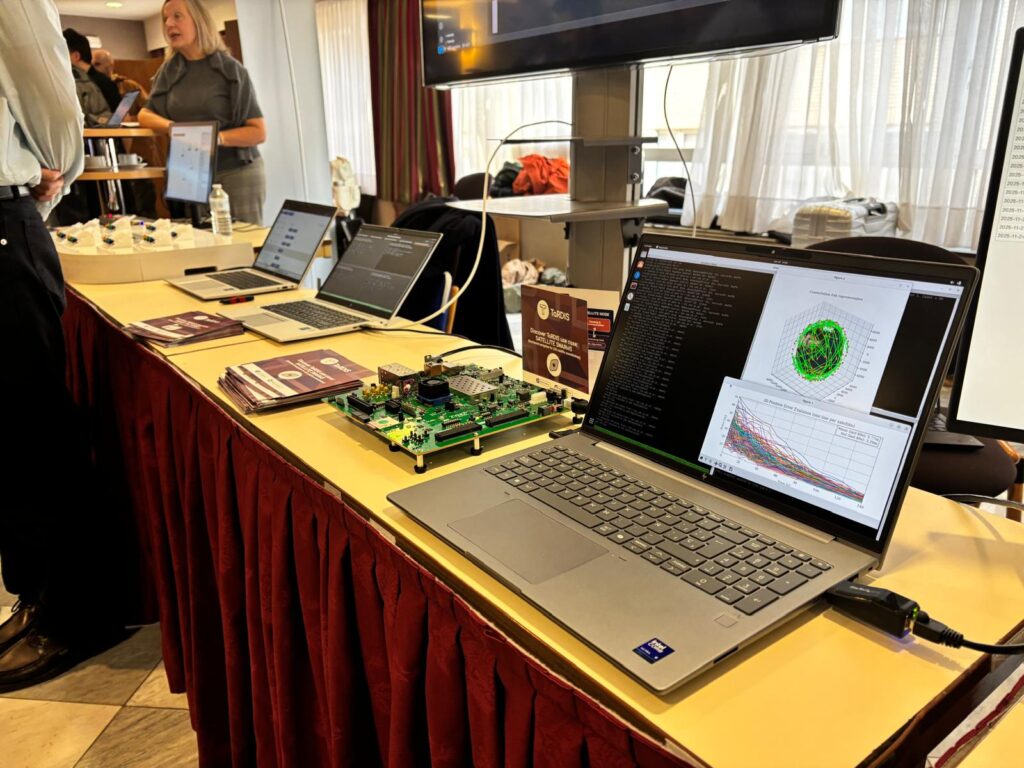
A rich demo expo allowed attendees to interact with cutting-edge swarm technologies:
- Robot Swarms & Testbeds: Large-scale robot coordination platforms enabling up to 1,000 robots to operate collaboratively.
Energy & EV Services: Swarm-based energy forecasting and management modules supporting grid efficiency. - Environmental Monitoring: Buoy-based ocean noise tracking and agricultural drone swarms.
- Smart Factory Solutions: Wearable safety networks and mobile robotic logistics systems demonstrating real factory use cases.
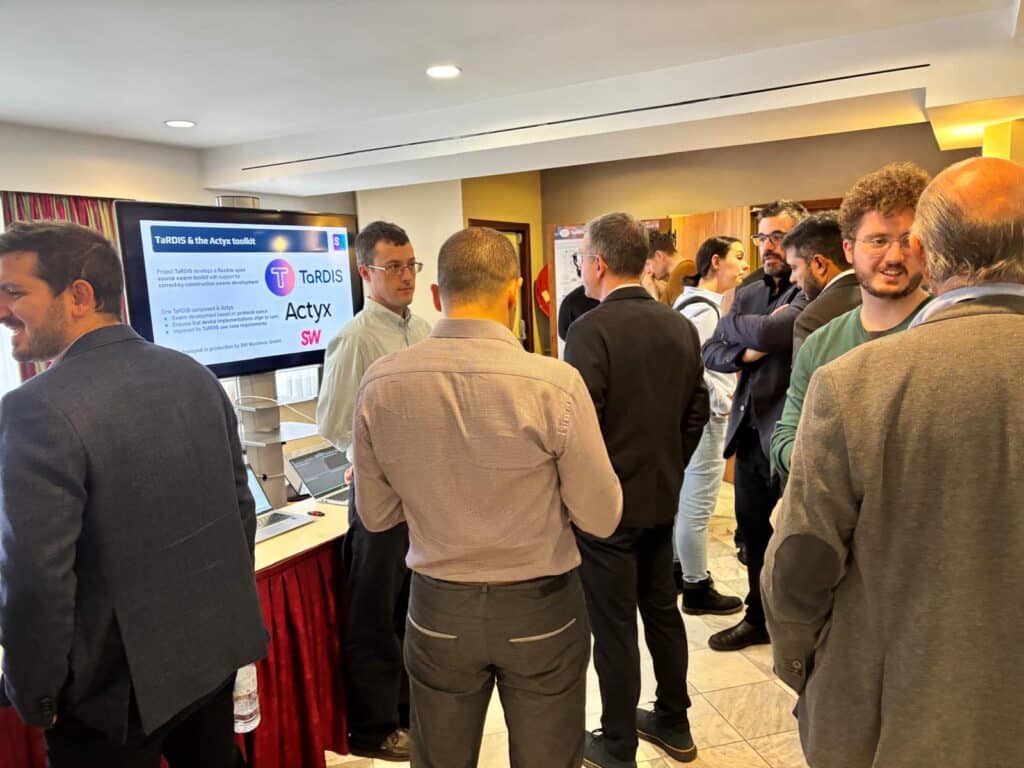
Each project hosted its own demonstration booth, providing hands-on insights into emerging decentralised technologies and enabling direct exchange between developers, end-users, and potential collaborators.
Building the Future of Swarm Computing
Organisers emphasised the importance of cross-community collaboration, open standards, and shared research platforms in advancing Europe’s digital sovereignty and shaping a resilient data and computing continuum. With attendance free of charge but subject to availability, the workshop drew a diverse audience from academia, industry and policy arenas, fostering synergies that will continue beyond the two-day event.
For more information on the workshop and future events in the swarm computing community, visit SwarmWorkshop.eu.
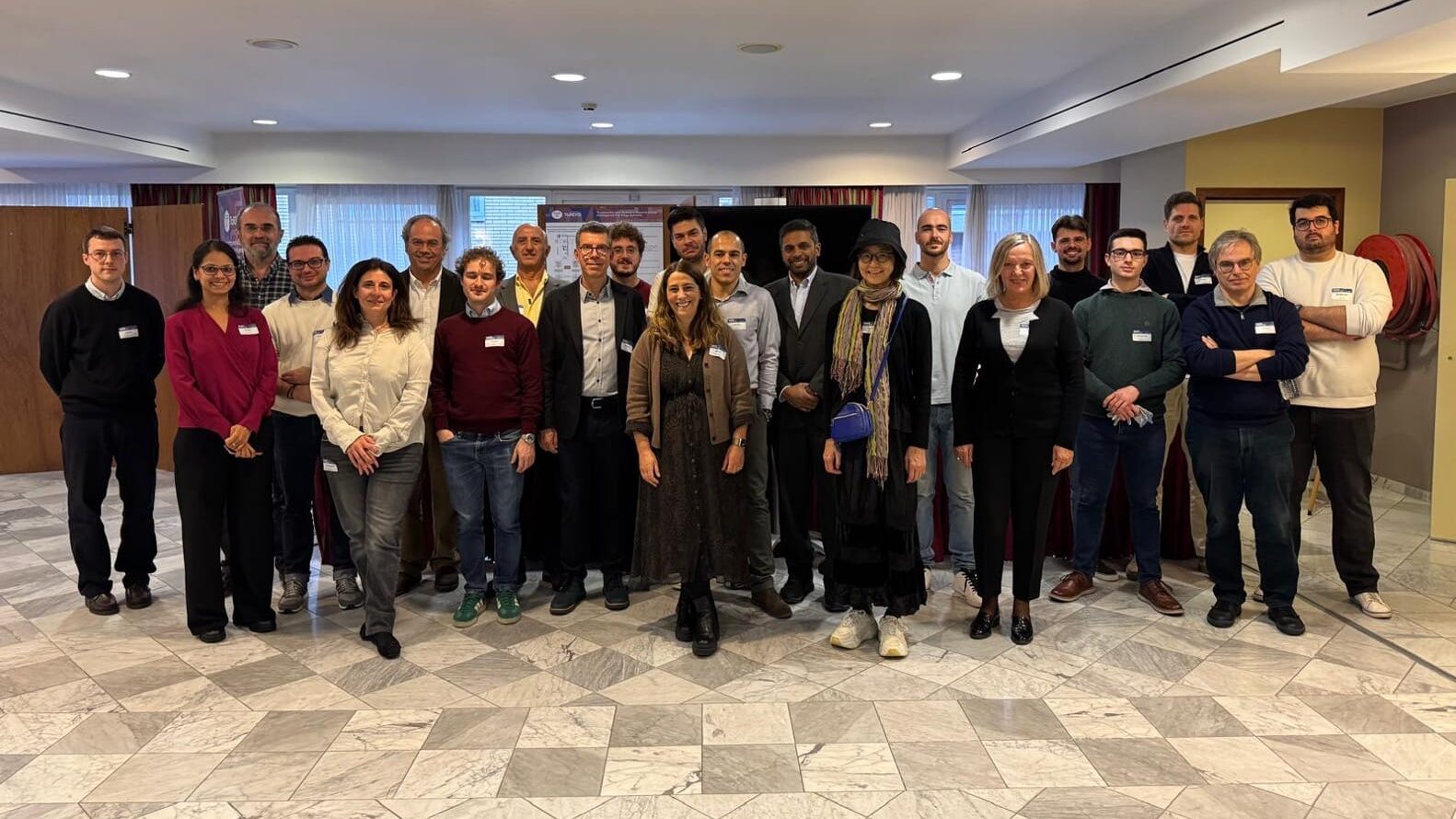
Some glimpses from the event